12 Minute Read
On May 6, 2026, Jamyang’s resident teacher Geshe Tenzin Namdak will be starting a new elaborate course on calm abiding and special insight, relying primarily on Je Rinpoche’s Lamrim Chenmo. This Wednesday course, meant to introduce modern-day practitioners to the quintessential practices of mental stability and wisdom, will include both practical instructions and a thorough exploration of the textual sources. Michael Lobsang Tenpa explores the reasons to pay close attention to this unique opportunity.
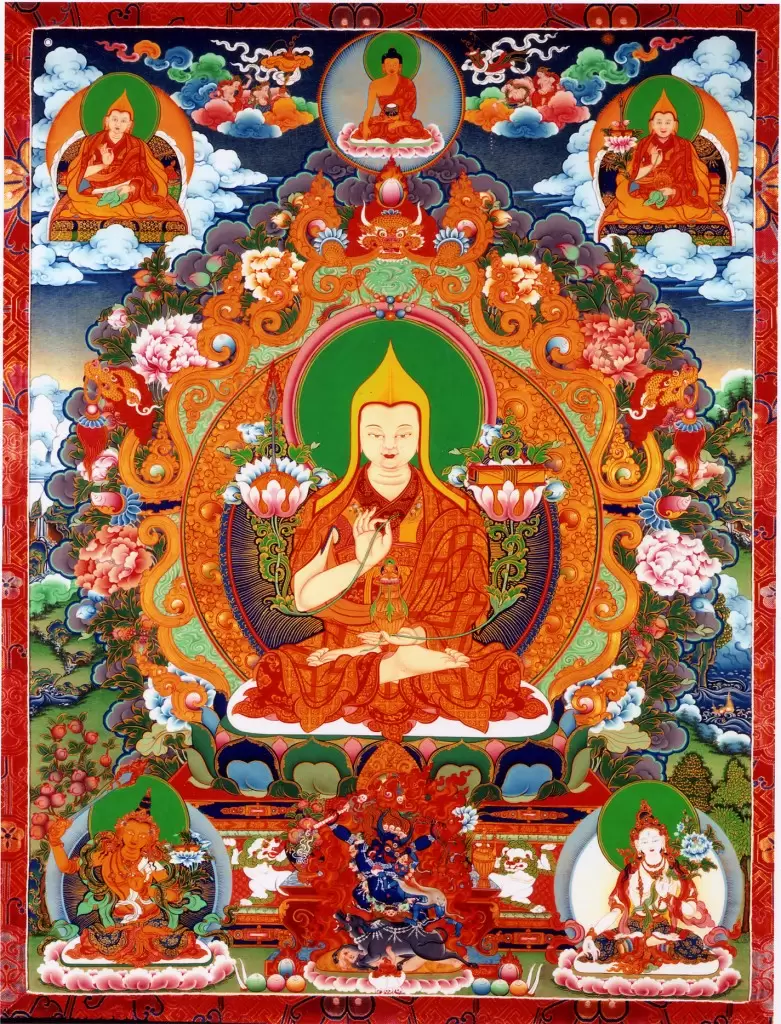
Exploring the Heart of Buddhist Meditation
Trying to identify the very heart of Buddhist meditation—its most quintessential element—is an interesting thought exercise, since opinions would obviously vary. Some traditions might perhaps point at the pinnacle of their contemplative arsenal—at the most advanced teachings related to wisdom, such as “silent illumination”, Mahamudra or Dzogchen. Others might mention a particular quintessentialized presentation of all the main aspects of the path, or even mention a specific mental quality, such as mindfulness, as being of utmost importance. There are also pithy statements summarizing everything in one point, such as Mingyur Rinpoche’s famous “The essence of meditation is awareness.” However, if we were to take a more broad overview of Buddhism’s multiple branches, a slightly more elaborate and cross-traditional answer might present itself: the practices that really characterize the Buddha’s unique approach to solving the problem of suffering are the dual methods of calm abiding and special insight–also known under the Sanskrit names, shamatha and vipashyana (or samatha and vipassana in Pali).
Shamatha practices were nothing new by the time of the Buddha; a part of a larger system of training known as samadhi (sometimes translated as “concentration” or, more literally, as “complete placement”), they were already perfected by the previous generations of practitioners and offered widely by the very two teachers that the Buddha himself studied with, Udraka Ramaputra and Arada Kalama. Prince Siddhartha Gautama was particularly gifted in the arts of samadhi and thus picked up everything that the two masters had to offer extremely fast. He discovered, however, that the training in concentration alone was not sufficient; it had to be combined with wisdom (prajna), cultivated through the practices of vipashyana, or special insight. Dr. Alan Wallace occasionally compares this combination of methods to the union of technology and science: shamatha provides the seeker with the contemplative technology (not unlike a telescope or a microscope, but for the mind) which can then be put to the service of contemplative science, primarily explored through vipashyana. Most of Buddha’s elaborate teaching career was spent on directly and indirectly teaching the methods of shamatha and vipashyana, along with the underlying level of ethical practice necessary to support the two.
Since the practices of shamatha and vipashyana are present in all the major Buddhist traditions, no matter how we classify them, one might naturally assume that they are fairly important, and quite likely even indispensable. However, for a modern practitioner, their usefulness might be proven even before entering the gateways of Buddhism proper, at the more common secularized level of practice shared by Buddhists and those who use the science-backed secular training modalities. Early evidence suggests, for example, that shamatha practices might improve the lives of those suffering from attention deficit, whereas emptiness-centered vipashyana meditations seem to support greater compassion and emotional wellbeing. Infinitely more research is needed, and is underway, but even these early publications suggest that one’s interest in these dual practices might be well-warranted.
What of Buddhists and their spiritual aspirations, then? At which point do these practices become particularly important? The answer is fairly straightforward: as soon as one starts aspiring for an irreversible transformation of the mind in this very life. Buddhist practitioners primarily aspiring for a good rebirth, whether in the human realm or in the Pure Lands such as Sukhavati, are usually not invited to practice shamatha and vipashyana as something indispensable (even though these practices can have a strengthening effect on one’s ethical discipline, which is still seen as essential). For this reason, some branches of the Pure Land tradition in East Asia do not teach these methods in an outward manner (although one might argue that focusing one’s mind single-pointedly on the Buddha of Infinite Light does bear semblance to shamatha). However, as soon as one starts actively aspiring for personal liberation or full awakening–the two higher goals delineated by the lamrim tradition of Tibetan Buddhism–shamatha and vipashyana gain utmost importance. For those moving towards arhatship, or personal liberation, these two correspond to the second and third of the three higher trainings (namely, the training in mental stability and wisdom). For those on the bodhisattva path, they form the last two moral perfections, or paramitas, that are necessary for becoming awakened. Those who integrate their bodhisattva journey with the skillful methods of Buddhist tantra are not exempt from this logic, either: attentional stability and the correct view of emptiness remain indispensable, or become even more important to make sure one doesn’t mistakenly turn one’s practice of Vajrayana into a cause for greater suffering instead of boundless happiness. In short, no matter which of the three major vehicles–foundational, that of perfections or that of the secret mantra–one follows: shamatha and vipashyana remain quintessential provisions on the path, or maybe its very essence.
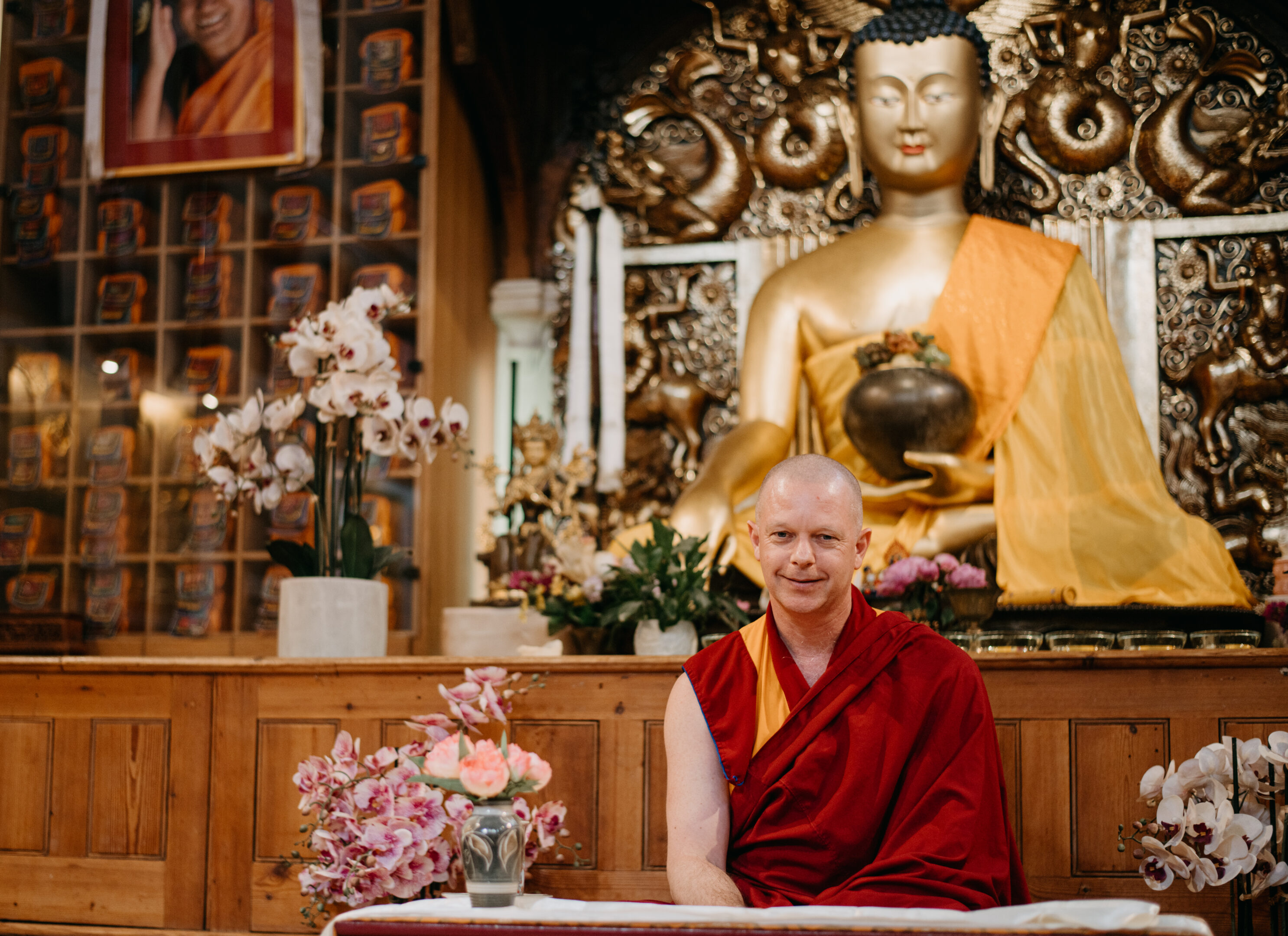
Image: Geshe Namdak in the Main Gompa at Jamyang
Je Rinpoche on calm abiding and special insight
What, then, of the different presentations of these practices in the Tibetan tradition, and maybe even the Gelug lineage in particular? There is no shortage of brilliant and inspiring sources: some extremely quintessential and only presenting one or two specific methods, and some extremely elaborate. When it comes to the elaborate presentations offered by the founder of tradition, Je Rinpoche Tsongkhapa, certain ambivalence of emotional reactions from modern readers might exist: some would find them greatly inspiring, while others would feel too much effort has to go into studying such detailed teachings. Why bother with such an academic source, one might think, when pith instruction texts teach me all I need to know in just a few paragraphs or even lines?
It is true that pith instruction manuals (whether short or elaborate) do exist and do already offer us a lot to chew on. Tsongkhapa certainly originated his own lineage of pith instructions on shamatha and vipashyana, some of which were eventually codified by Panchen Losang Chokyi Gyaltsen in his teachings on the Gelug-Kagyu style of Mahamudra. Why, then, read, let alone study, the presentation in such elaborate texts as Lamrim Chenmo, or the Great Presentation of the Stages of the Path to Awakening? Perhaps for two reasons: to know the full outline of the land, and to undo the knots of incorrect assumptions many of us–as first generation practitioners of Buddhism–might habitually carry.
Lamrim Chenmo, as Je Rinpoche’s opus magnum, does not simply offer practical instructions on the practice of the graduated path: those are already included in other manuals, including Tsongkhapa’s own Middle-Length Lamrim. Lamrim Chenmo, as the most elaborate version, presents the same essential points–the same map, in a way–but does so with much greater detail, going, on occasion, into detailed polemical presentations that would be of great help to the doubtful mind. The difference in the amount of detail is meant to give greater understanding. To use a medical analogy, it’s as if we were going from the ability to simply perform a medical procedure to an intimate understanding of human anatomy that underpins said procedure; we understand the deeper logic of things, which dispels our doubt and strengthens our resolve to keep practicing. While the hunger for scholarly perfection would probably not be quenched even by Lamrim Chenmo, the practitioner in us would receive more than enough to work with.
Tsongkhapa’s presentation of calm abiding, or shamatha, unpacks the practice (and the associated perfection of mental stability) with great detail. Je Rinpoche scoured a great number of sutras (such as the King of Samadhis Sutra and the Sutra Unravelling the Intended Meaning) and shastras (including the works of Kamalashila, Maitreya and Asanga) and brought the key points together in a clear presentation that could equally be used by an anthropologist and an actual practitioner. The difference between Lamrim Chenmo’s presentation and that of a short pith instruction text is in the level of detail on our inner map. For instance, when talking about the shamatha objects, Tsongkhapa does not limit himself to one, two or even ten; he presents the widest possible array, eventually settling on the visualized image of the Buddha as the main example (suggested, amongst other things, for its relationship with the visualization practices of tantra). He also unpacks the preliminary conditions necessary for undertaking a successful shamatha retreat; the mental factors that need to be fine-tuned for the practice of calm abiding to be successful; and, finally, the stages of progress, each accompanied by the gradual decrease in the levels of laxity and excitation and culminating with the actual realization of calm abiding. In exploring these topics, Tsongkhapa alternates actual authoritative explanations (supported by numerous references to the shastras and sutras) with a “question and answer” format, dealing with potential doubts and objections in a way that makes the path extremely clear.
This presentation of calm abiding, though elaborate, is still dwarfed by Lamrim Chenmo’s section of special insight. Written for practitioners who are also not shy of a certain amount of study, it goes into great length to first explain what special insight itself is, and then to unpack the ways to construct one’s vipashyana practice focused on emptiness. The Gelug approach to meditating on emptiness puts great emphasis on the correct identification of the “object of negation”–the impossible type of existence that the meditating mind has to refute. Since exaggerating or underestimating this object can lead one to the extremes of nihilism and eternalism, Tsongkhapa takes great care to present his unique and powerful understanding of Chandrakirti’s and Buddhapalita’s view on the matter, engaging, again, in a type of virtual debate with the potential objections regarding the topic. In this, the extremely elaborate presentation of Lamrim Chenmo works well in combination with Tsongkhapa’s own more abbreviated presentation in the Middle-Length Lamrim, along with careful guidance from a teacher experienced in these meditations. An unsupported beginner might feel that the profusion of information is overwhelming, but someone supported by gentle guidance and clear contextualizing explanations would see how each point becomes a major source of support for one’s emptiness practice. For a Gelug practitioner, the study of the insight section of Lamrim Chenmo is a way to look straight into Tsongkhapa’s intent for how emptiness meditations should be done; it is a synthesis of everything that Je Rinpoche had to say on the matter in his other seminal works on wisdom.
Studying a text as elaborate as Lamrim Chenmo and practicing shamatha and vipashyana might initially feel like two very different types of activity. If we want to meditate, shouldn’t we just… meditate? No one is blocking us from making our first attempts to calm the mind at a very early stage; but it is also true that careful exploration of the maps offered by Je Rinpoche would make us infinitely more informed as we try to undertake the elaborate, complex and exciting journey known as the contemplative path. After all, even His Holiness the Dalai Lama, known for his mastery of numerous shastras and tantras, turns to Lamrim Chenmo often enough to have read it dozens of times (as once mentioned by Lama Zopa Rinpoche, who also used to advise his students to read and re-read the lamrim texts multiple times). It was the one book His Holiness carried with him when leaving the Norbulingka summer palace on March 17, 1959; the very same cherished copy was later used to give teachings and explanations to numerous students across the world. By tapping into the same source, we can hope to cultivate some of the same wisdom and practical insights that the entire lineage of Je Rinpoche’s heirs has so beautifully embodied.
To learn more about the upcoming course and sign up, check the page here.