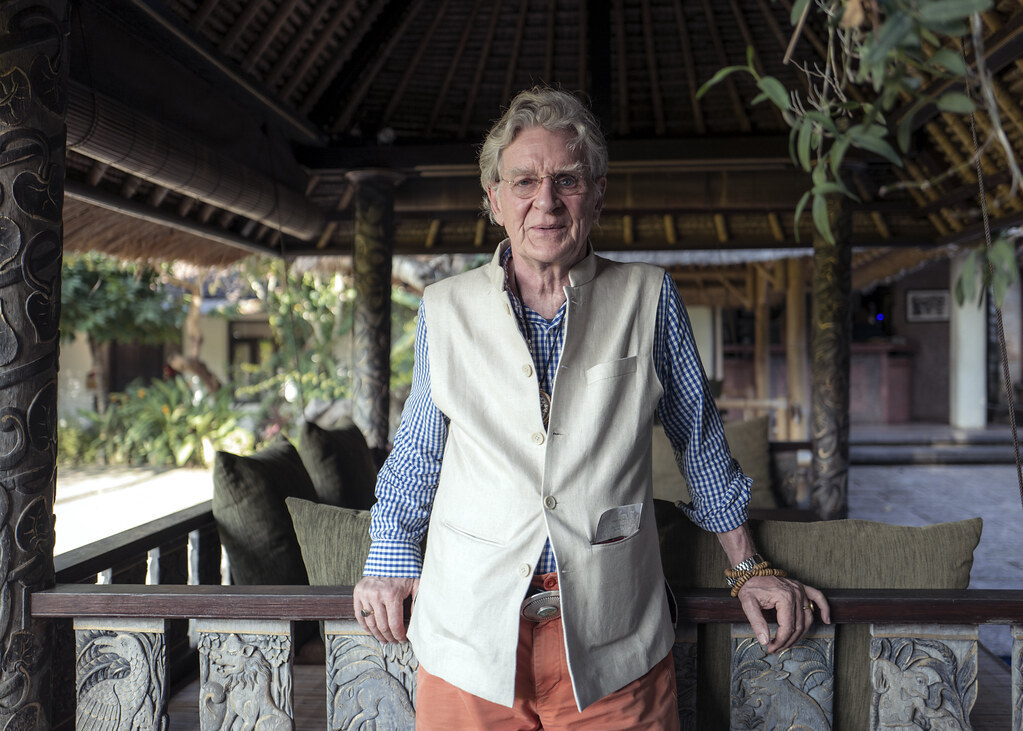
Image: Bob Thurman in Bali, 2016, by Christopher Michel
Professor Robert Thurman died on Tuesday 16 June at his home in Woodstock, New York. He was 84. For more than half a century he gave himself to the study, translation, and teaching of Tibetan Buddhism, and to the cause of the Tibetan people. His loss is felt keenly here, not least because he sat and taught in this building only last year.
He was, by any measure, an unconventional man. He grew up in New York City among the weekly Shakespeare readings his parents hosted at home, the guests on occasion including Laurence Olivier. In 1958, shortly before he was due to graduate, he was expelled from school for slipping away in an attempt to join Fidel Castro’s guerrillas in Cuba. He was turned back at the border. Harvard admitted him regardless.
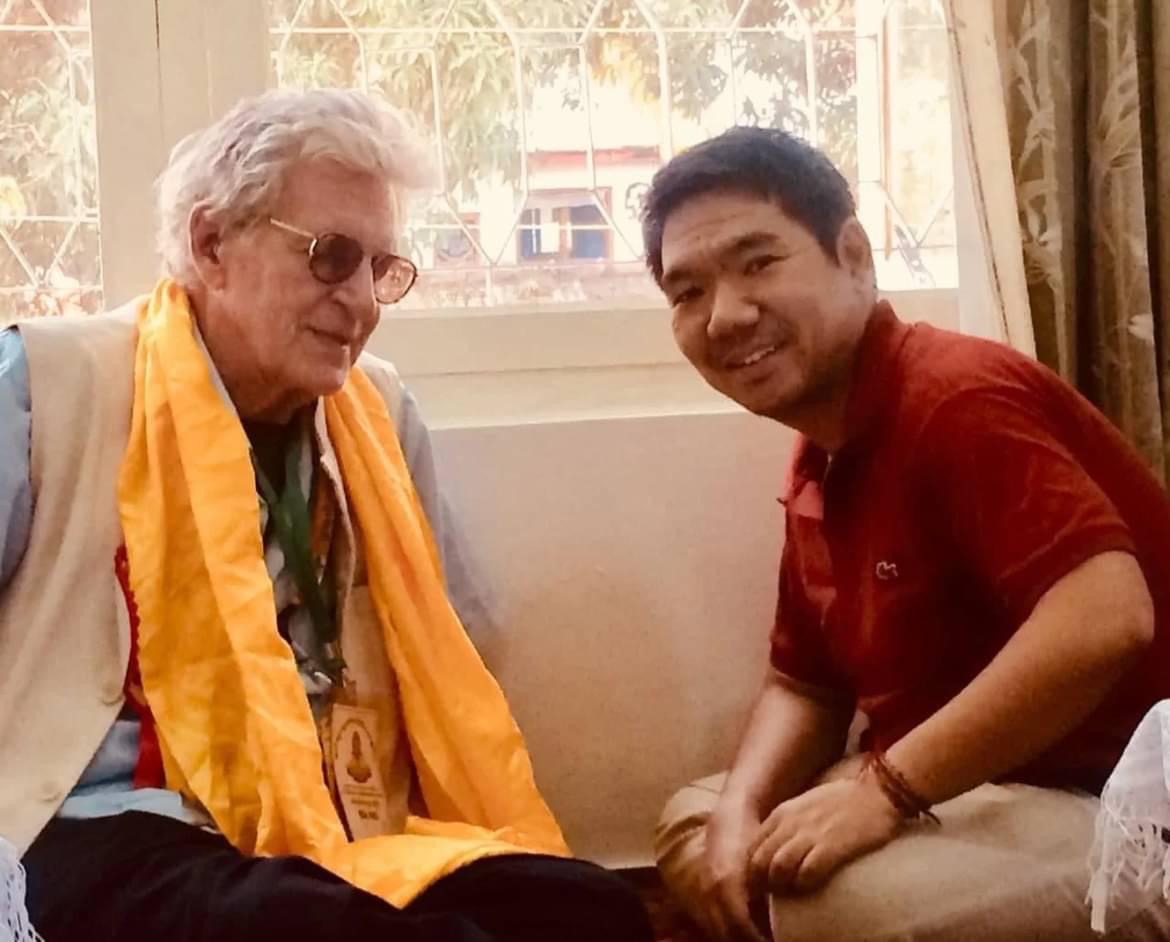
His life changed course in 1961, when an accident cost him the sight of one eye. The loss seems to have opened a question in him that the lecture hall could not answer. He left Harvard and set out as a pilgrim, travelling through Europe, the Middle East, Iran, and Turkey, before reaching India, where he taught English to Tibetans newly arrived in exile. Returning home for his father’s funeral, he met the Mongolian monk Geshe Ngawang Wangyal, who became his first teacher. That meeting set the direction of the rest of his life.
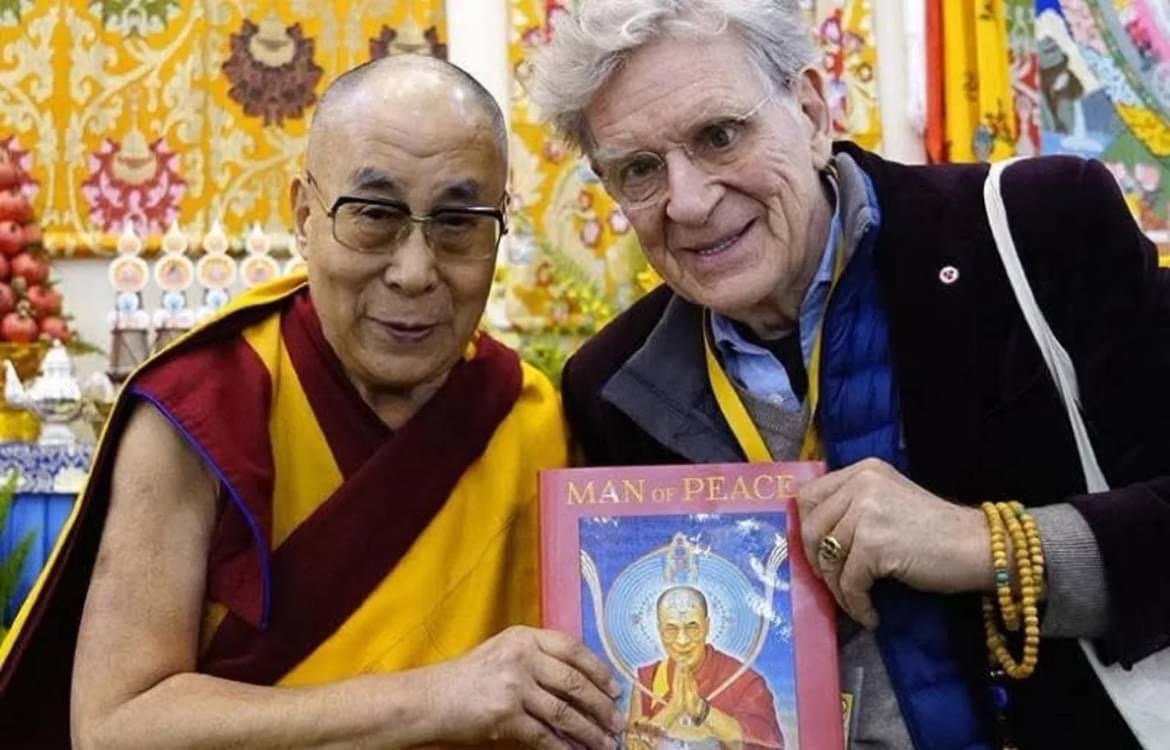
In India he first saw His Holiness the Dalai Lama, and in the early 1960s, still in his early twenties, he became the first American to be ordained as a Buddhist monk by His Holiness. He gave up his robes a few years later, having concluded, in his own telling, that he could do more good in what he called the American monastery, the university. He returned to his studies, took his doctorate, and in time became the first Buddhist granted tenure at Amherst College. In 1979 he helped arrange the Dalai Lama’s first visit to an American university. He went on to hold the Je Tsongkhapa Chair in Indo-Tibetan Buddhist Studies at Columbia, the first endowed chair of its kind in the West, where he taught until his retirement in 2019.
It is as a translator that many practitioners will remember him most gratefully. From the Tibetan he translated The Holy Teaching of Vimalakirti, a rendering scholars have ranked among the finest of that sutra in English. He translated Je Tsongkhapa’s Essence of True Eloquence, a text of such difficulty that a fellow scholar called translating it correctly a staggering achievement. As president of the American Institute of Buddhist Studies, he set in motion the long work of translating the Tengyur, the vast collection of Indian Buddhist treatises preserved in Tibetan, so that texts once closed to all but a few might be opened to readers in English. For practitioners in the West, that work is part of the ground we stand on. Much of what we are able to study today, we can study because of scholars like him.
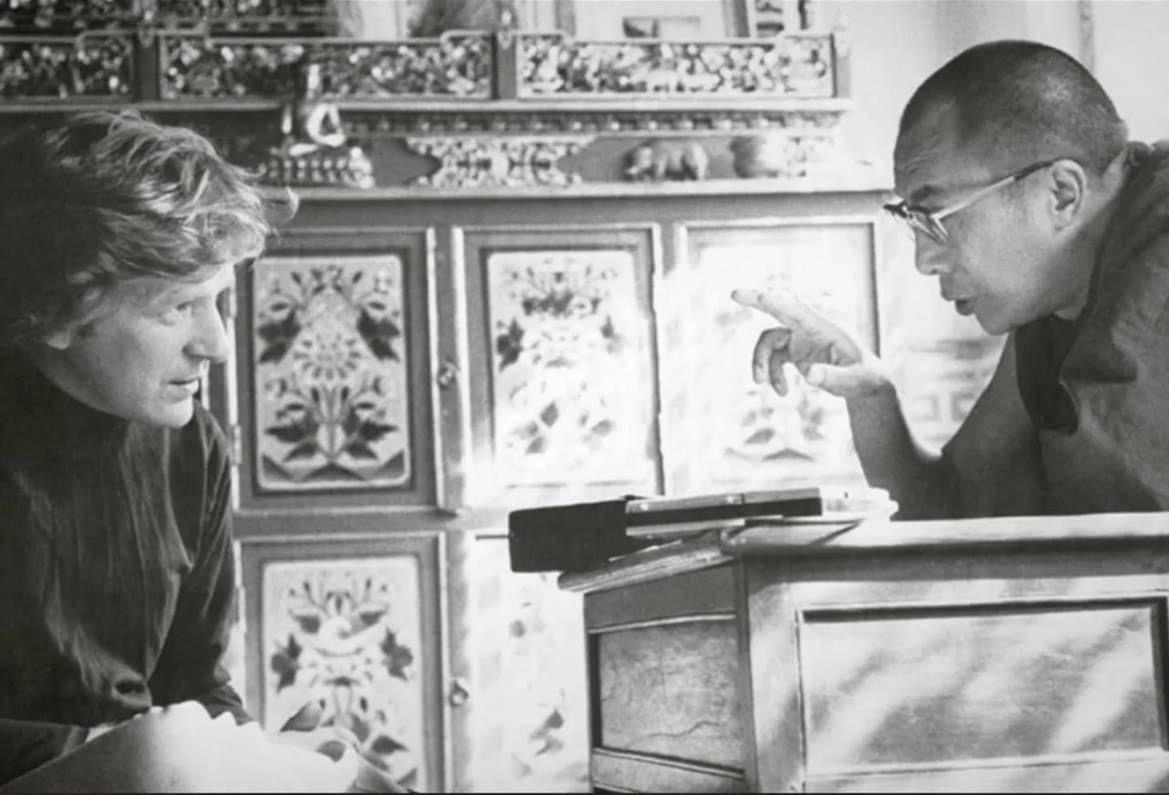
He gave himself just as fully to Tibet itself. In 1987, at the request of His Holiness, he co-founded Tibet House US alongside Tenzin Tethong, the actor Richard Gere, and the composer Philip Glass, an institution devoted to preserving Tibetan civilisation and culture in exile. He later helped establish Menla, a retreat centre in the Catskill mountains dedicated to Tibetan medicine and healing arts, where he served as spiritual director. India honoured him with the Padma Shri, and Time once named him among the most influential Americans of his generation. He wore none of it heavily.
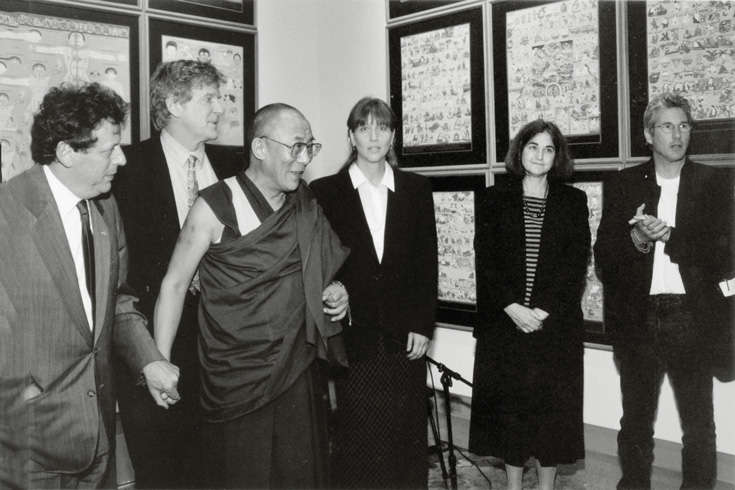
Image credit: The Inauguration of Tibet House New York, 1998; Philip Glass, Bob Thurman, His Holiness the Dalai Lama, Elizabeth Avedon, Richard Gere
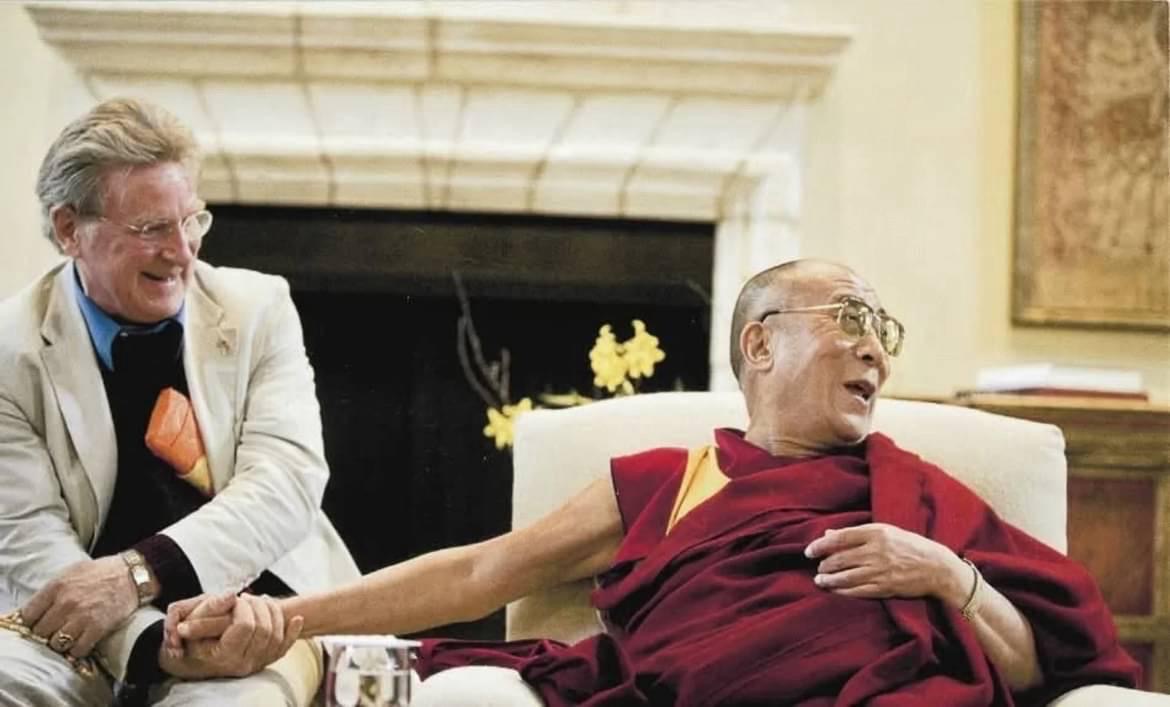
Through all of it ran his friendship with His Holiness the Dalai Lama, which lasted for decades. His Holiness called him, simply, an old friend. It is fitting, then, that the teaching Professor Thurman gave when he visited Jamyang last year was titled The Great 14th Dalai Lama as Guru Mahavajradhara. It was his first visit to our centre, a rare gift to welcome him to London, and we feel fortunate to have made that connection while we could. We are glad to be able to share that teaching here, so that those who were present can return to it, and those who were not can hear him for themselves.
Ven. Drolma, Jamyang’s Executive Director, shares “Professor Robert Thurman carried the Dharma in his whole person, in his scholarship, his fierce advocacy for the Tibetan people, and his sixty-year friendship with His Holiness the Dalai Lama. More than perhaps any other Western figure, he opened the wealth of Tibetan Buddhism to a generation ready for its wisdom, and did so with a brilliance that made the most profound teachings feel both rigorous and alive.
We were deeply fortunate to welcome him to Jamyang last November, where he spoke, with his signature fire, compassion, and mischievous wit, on His Holiness as Guru Mahāvajradhara. To be in that room was to feel the full force of his gifts.
His passing leaves an immeasurable absence. The translations, the institutions, the unwavering advocacy, these are his legacy to us all, for which we are profoundly grateful.”
Those who wish to learn more about his life and writing can visit his website at bobthurman.com, and explore the work of the institutions he built at Tibet House US (thus.org) and Menla (menla.org).
We keep his family in our thoughts, and we offer our practice in his memory.
Om Mani Padme Hum.
(all other images courtesy of Bob Thurman’s personal archive)